
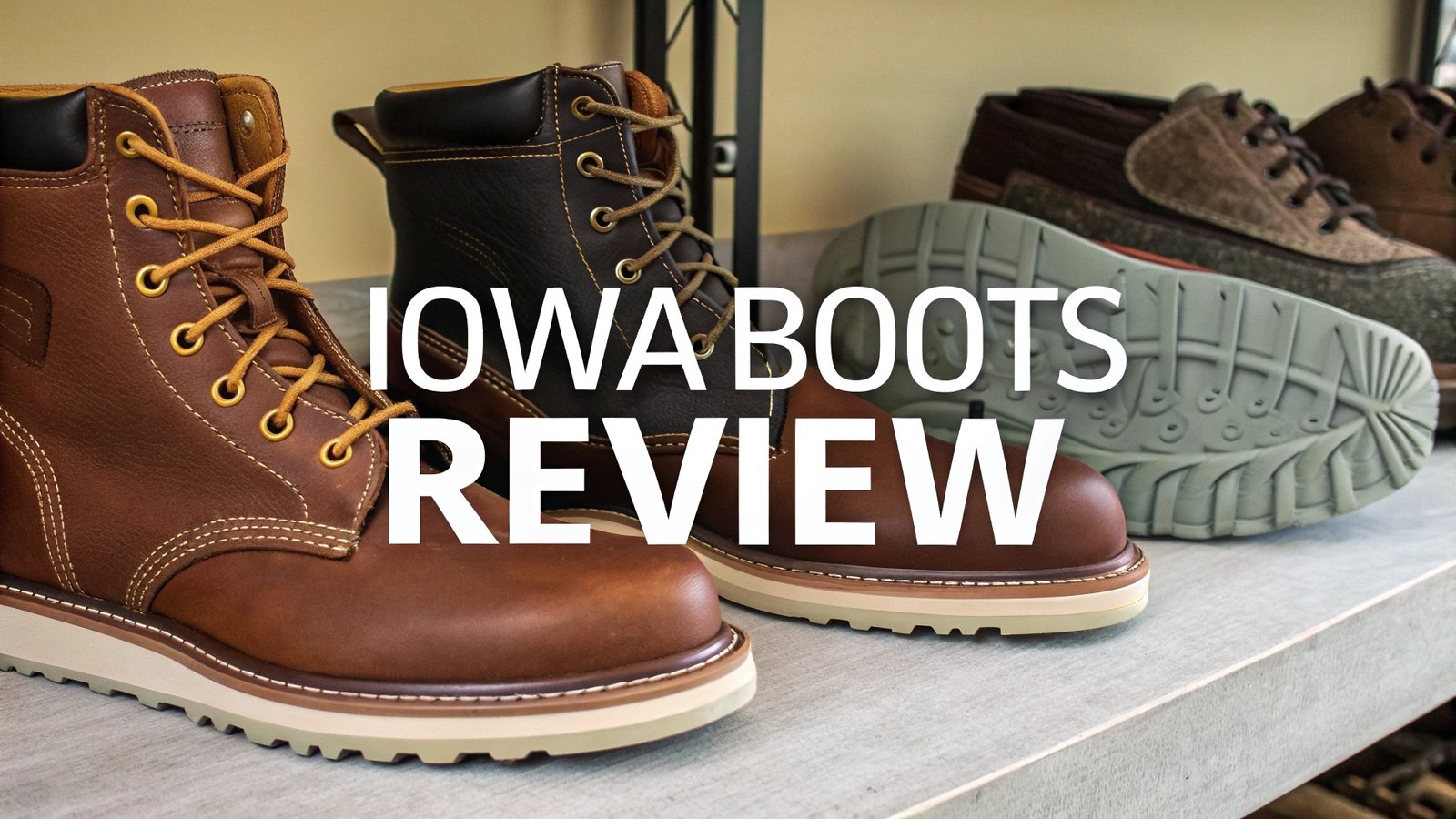
Are you searching for reliable work boots that can handle the demanding conditions of Iowa’s construction sites? Look no further than this comprehensive Iowa boots review.
These boots have earned their reputation among hardworking professionals who need footwear that delivers comfort, durability, and safety in equal measure.
This detailed review covers everything you need to know about Iowa boots, from their construction quality to comfort features.
Key Takeaways
- Exceptional Durability: Iowa boots feature premium leather construction with reinforced stitching that withstands harsh work environments and heavy daily use without premature wear
- Safety First Design: Multiple models offer steel toe protection and composite toe options that meet ASTM safety standards for impact resistance and compression protection in hazardous workplaces
- All-Weather Performance: Waterproof membranes and sealed seam construction keep feet dry during rain, snow, and wet working conditions while maintaining breathability for comfort
- Superior Comfort Technology: Advanced cushioning systems, shock-absorbing midsoles, and ergonomic footbeds provide all-day comfort even during 12-hour work shifts
- Versatile Work Applications: Suitable for construction workers, electricians, mechanics, warehouse workers, and outdoor professionals who demand reliable footwear performance
- Value for Investment: While priced competitively, Iowa boots offer excellent long-term value through extended lifespan and reduced replacement frequency compared to cheaper alternatives

Professional Grade Work Boot Construction Quality
Iowa boots represent the gold standard in work boot construction. These boots feature full-grain leather uppers that resist scuffs, cuts, and abrasions common in construction environments. The leather undergoes specialized treatment processes that enhance its natural durability while maintaining flexibility for comfortable movement.
The construction process involves Goodyear welt construction in premium models. This traditional method creates a strong bond between the upper, sole, and welt that allows for resoling when needed. This feature significantly extends the boot’s lifespan and provides excellent value for money over time.
Reinforcement zones appear in high-wear areas such as the heel counter and toe box. These areas receive additional layers of material and specialized stitching patterns that prevent premature failure. The boot’s interior features moisture-wicking linings that keep feet dry and comfortable throughout long work days.
Quality control measures ensure each boot meets strict standards before leaving the factory. Random testing includes flex testing, waterproof verification, and safety certification compliance checks that guarantee consistent performance across all units.
Advanced Safety Features and Protection Systems
Iowa boots prioritize worker safety through comprehensive protection systems. Steel toe caps in safety models meet or exceed ASTM F2413 standards for impact resistance up to 75 pounds and compression resistance up to 2,500 pounds. These specifications ensure adequate protection against falling objects and compression hazards.
Composite toe alternatives provide similar protection levels while offering lighter weight and better temperature regulation. These non-metallic safety toes work well in environments with electrical hazards or extreme temperature variations where metal components might conduct electricity or become uncomfortably hot or cold.
The puncture-resistant midsole technology incorporates flexible materials that prevent sharp objects from penetrating through the boot sole. This feature proves essential for workers in construction sites where nails, screws, and metal debris create constant puncture risks.
Slip-resistant outsole compounds feature specialized rubber formulations with aggressive tread patterns. These outsoles maintain traction on wet, oily, or uneven surfaces common in industrial environments. The tread design includes multiple grip zones optimized for forward motion, lateral stability, and braking performance.
Waterproof Technology and Weather Protection

Iowa boots incorporate advanced waterproof membrane technology that keeps feet dry in challenging weather conditions. The waterproof barrier allows moisture vapor from perspiration to escape while preventing external water from entering the boot interior.
Sealed seam construction eliminates water entry points at critical junction areas. Special waterproof threads and sealing compounds ensure long-lasting weather protection even after extended use. This attention to detail prevents the gradual deterioration of waterproof properties that affects many competing boots.
The breathable lining systems work in conjunction with waterproof membranes to maintain comfortable internal climate conditions. These linings wick moisture away from the foot while allowing air circulation that prevents the clammy feeling associated with non-breathable waterproof boots.
Gusseted tongues provide additional water protection by creating a barrier that prevents water from entering through the lacing area. This design feature proves particularly valuable when working in puddles, wet concrete, or during rainy weather conditions.
Temperature regulation systems help maintain comfortable foot temperature across varying weather conditions. Insulation options provide warmth in cold environments while breathable materials prevent overheating in warm conditions.
Top 3 Alternatives for Iowa Boots


Comfort Technology and Ergonomic Design
Comfort represents a crucial factor in work boot selection, especially for professionals who spend entire shifts on their feet. Iowa boots incorporate multiple comfort technologies that reduce fatigue and enhance productivity throughout demanding work days.
Advanced cushioning systems feature multi-density foam construction that provides targeted support for different foot areas. The heel receives firm support for stability while the forefoot area includes softer cushioning for comfort during walking and standing. This dual-density approach optimizes both support and comfort.
The ergonomic footbed design follows natural foot contours to provide arch support and proper weight distribution. Many models include removable insoles that allow customization with orthotic devices for workers with specific foot conditions or preferences.
Shock absorption technology in the midsole and heel areas reduces impact forces transmitted to the foot and leg during walking on hard surfaces. This feature proves particularly beneficial for workers who spend time on concrete floors or other unforgiving surfaces.
Padded collar and tongue areas prevent pressure points and chafing that can develop during long work periods. The padding materials resist compression over time to maintain their protective properties throughout the boot’s lifespan.
Moisture management systems include antimicrobial treatments that prevent odor development and maintain hygienic conditions inside the boot. These treatments remain effective even after numerous washing cycles.
Durability Testing and Long-Term Performance
Iowa boots undergo rigorous durability testing that simulates years of heavy use in compressed time periods. These tests evaluate critical performance areas including sole attachment strength, upper material integrity, and waterproof membrane longevity.
Flex testing subjects boots to repeated bending cycles that simulate normal walking motions. Testing continues for hundreds of thousands of cycles to ensure the boot maintains its structural integrity under normal use conditions. This testing identifies potential failure points before they affect real-world performance.
Abrasion resistance testing evaluates how well boot materials resist wear from contact with rough surfaces. Different areas of the boot receive specific testing protocols that match their expected use patterns. Results guide material selection and treatment processes for optimal durability.
Chemical resistance testing determines how boot materials react to common workplace chemicals including oils, solvents, and cleaning compounds. This information helps workers select appropriate boots for their specific work environments.
Real-world field testing involves professional workers who wear test boots in actual work conditions. Their feedback provides valuable insights into comfort, durability, and performance characteristics that laboratory testing cannot fully capture.
Quality assurance programs track boot performance over extended periods to identify any trends or issues that might develop. This data drives continuous improvement efforts that enhance future boot designs.
Sizing Guide and Fit Recommendations
Proper boot fit plays a crucial role in comfort, safety, and performance. Iowa boots follow standard sizing conventions but individual fit characteristics may vary between models and foot shapes.
Length sizing should provide approximately half an inch of space between the longest toe and boot front. This space accommodates foot expansion during the day and prevents toe crowding that can cause discomfort or injury. Measuring feet in the afternoon provides more accurate sizing information since feet naturally expand throughout the day.
Width considerations become particularly important for workers who spend long hours in their boots. Iowa boots offer various width options to accommodate different foot shapes. Wide feet require appropriate width sizing to prevent pressure points and circulation problems.
Arch support compatibility varies between individuals and work requirements. Workers with high arches may benefit from boots with enhanced arch support or the ability to accommodate custom orthotic devices. Flat-footed individuals may prefer different support characteristics.
Break-in period expectations help new users adjust their expectations appropriately. Quality work boots typically require 40-80 hours of wear to fully conform to individual foot shapes. Gradual break-in periods prevent discomfort and allow proper adaptation.
Sock selection influences fit and comfort significantly. Appropriate work socks provide cushioning, moisture management, and proper fit within the boot. Thick socks may require slightly larger boot sizes to maintain comfortable fit.
Maintenance and Care Instructions

Proper maintenance extends boot life significantly while maintaining performance characteristics. Iowa boots respond well to regular care routines that address cleaning, conditioning, and protection needs.
Daily cleaning routines should remove dirt, debris, and contaminants that can accelerate wear or compromise materials. Simple brushing and wiping prevent accumulation of harmful substances that might damage leather or other boot components.
Leather conditioning treatments maintain flexibility and water resistance in leather uppers. Quality leather conditioners penetrate the material to replace natural oils that escape during use. Regular conditioning prevents cracking and extends leather life significantly.
Waterproof treatment renewal becomes necessary as boots age and original treatments wear away. Appropriate waterproofing products restore protective barriers and maintain weather resistance. Different boot materials may require specific treatment types for optimal results.
Sole inspection and maintenance helps identify wear patterns that might indicate fit issues or gait problems. Excessive wear in specific areas may require addressing underlying causes to prevent premature boot replacement.
Proper drying techniques prevent damage from moisture exposure. Room temperature air drying works best for most boot materials. Direct heat sources can damage leather and synthetic materials while inadequate drying promotes bacterial growth and odor development.
Storage considerations protect boots during periods of non-use. Clean, dry storage in ventilated areas prevents mold growth and material degradation. Boot trees or stuffing help maintain shape during extended storage periods.
Steel Toe vs Composite Toe Protection
Understanding safety toe options helps workers select appropriate protection for their specific work environments. Both steel and composite toes offer excellent protection but with different characteristics and benefits.
Steel toe advantages include superior impact resistance, proven durability, and cost-effectiveness. Steel toes typically cost less than composite alternatives while providing reliable protection that has protected workers for decades. They resist puncture attempts and maintain their protective properties even after severe impacts.
Steel toe limitations include increased weight, thermal conductivity, and electrical conductivity. Cold weather can make steel toes uncomfortably cold while hot weather creates the opposite problem. Electrical workers must avoid steel toes in environments with electrical hazards.
Composite toe benefits include lighter weight, electrical insulation properties, and better temperature regulation. These toes provide comparable protection to steel while weighing significantly less. They do not conduct electricity or temperature, making them suitable for electrical work and extreme temperature environments.
Composite toe considerations include higher initial cost and potential for gradual compression under extreme loads. While they meet safety standards, some users prefer the absolute rigidity of steel toes for maximum protection confidence.
Safety standard compliance ensures both toe types meet ASTM requirements for workplace safety. Proper certification markings indicate compliance with relevant standards for impact and compression resistance.
Outsole Technology and Traction Performance
Outsole design significantly impacts safety, comfort, and performance in various work environments. Iowa boots feature advanced outsole technologies that provide excellent traction while resisting wear and environmental damage.
Rubber compound formulations balance traction, durability, and flexibility requirements. Specialized compounds maintain grip characteristics across temperature ranges while resisting cuts, chemicals, and abrasion. Different work environments may benefit from specific compound characteristics.
Tread pattern design optimizes traction for various surface conditions. Deep lugs provide excellent grip on loose surfaces while flatter areas offer stability on smooth floors. Self-cleaning tread designs prevent debris accumulation that reduces traction effectiveness.
Slip resistance ratings help workers select appropriate boots for their work environments. Standardized testing provides objective measurements of slip resistance on various surface conditions including wet, oily, and contaminated surfaces.
Heat resistance properties become important for workers exposed to hot surfaces or environments. Specialized outsole materials resist melting and degradation at elevated temperatures while maintaining their protective and traction properties.
Puncture resistance features protect against sharp objects that might penetrate standard outsole materials. Flexible plates or specialized compounds provide protection without compromising comfort or flexibility.
Wear pattern indicators help users monitor outsole condition and plan for replacement. Understanding normal wear patterns versus excessive wear helps identify potential fit or gait issues that might require attention.
Insulation Options for Different Climates
Climate considerations play crucial roles in work boot selection, especially for outdoor workers or those in unheated facilities. Iowa boots offer various insulation levels to match different temperature requirements and work conditions.
Thinsulate insulation provides excellent warmth-to-weight ratios while maintaining breathability. Different gram weights offer varying insulation levels from light protection for mild conditions to heavy insulation for extreme cold environments.
Natural insulation materials including wool provide excellent temperature regulation and moisture management. These materials maintain insulating properties even when damp while offering natural antimicrobial benefits.
Removable liner systems allow customization for changing conditions or personal preferences. Users can adjust insulation levels by changing liners or remove them entirely for warmer conditions.
Breathability balance becomes critical in insulated boots to prevent moisture accumulation that reduces insulation effectiveness. Proper vapor management systems maintain dry internal conditions while providing thermal protection.
Activity level considerations influence insulation needs significantly. Workers with high activity levels generate more body heat and may require less insulation than sedentary workers in similar environments.
Price Point Analysis and Value Proposition
Iowa boots occupy various price points to accommodate different budgets and requirements. Understanding the relationship between price and features helps buyers make informed decisions that provide optimal value.
Entry-level models provide basic protection and comfort features at accessible price points. These boots suit workers with limited budgets or those who need occasional-use boots for light-duty applications.
Mid-range options offer enhanced comfort, durability, and safety features that justify higher prices for regular users. These boots typically provide the best balance of performance and cost for most professional workers.
Premium models include advanced technologies, superior materials, and specialized features that command higher prices. These boots serve professionals who demand maximum performance or work in extreme conditions.
Total cost of ownership includes initial purchase price, maintenance costs, and replacement frequency. Higher-quality boots often provide better long-term value despite higher initial costs due to extended service life.
Warranty coverage varies between models and price points. Understanding warranty terms helps buyers assess manufacturer confidence in product quality and available recourse if problems develop.
Frequently Asked Questions
How long do Iowa boots typically last with regular use?
Iowa boots typically last 12-18 months with regular daily use in demanding work environments. Proper maintenance, rotation between multiple pairs, and appropriate use conditions can extend this lifespan significantly. Heavy-duty construction workers might see shorter lifespans while office or light-duty users can expect longer service life.
Are Iowa boots suitable for electrical work environments?
Iowa boots offer both steel toe and composite toe options. For electrical work, composite toe models provide electrical insulation properties that steel toe versions cannot offer. Always verify specific electrical hazard ratings and certifications for your particular work environment requirements.
Can Iowa boots be resoled when the outsole wears out?
Many Iowa boot models feature Goodyear welt construction that allows professional resoling when the outsole wears out but the upper remains serviceable. This feature significantly extends boot life and provides excellent long-term value. Check specific model construction details to confirm resoling capability.
What is the recommended break-in period for Iowa boots?
Iowa boots typically require 40-80 hours of wear for complete break-in. Start with shorter wear periods and gradually increase duration to allow proper adaptation. Proper fit reduces break-in time and discomfort during the adaptation period.
Do Iowa boots offer wide width options for different foot shapes?
Iowa boots provide various width options to accommodate different foot shapes and sizes. Wide and extra-wide options are available in many models. Proper width fitting prevents pressure points and circulation problems during extended wear.
How do I maintain waterproof properties in Iowa boots?
Regular cleaning and periodic waterproof treatment renewal maintain protective barriers. Avoid harsh chemicals that might damage waterproof membranes. Allow proper drying between uses and inspect regularly for damage that might compromise waterproof integrity.
Are Iowa boots covered by warranty against manufacturing defects?
Iowa boots include manufacturer warranties against defects in materials and workmanship. Warranty terms vary by model and price point. Normal wear and damage from misuse or extreme conditions typically fall outside warranty coverage. Keep purchase receipts and follow proper care instructions to maintain warranty validity.
