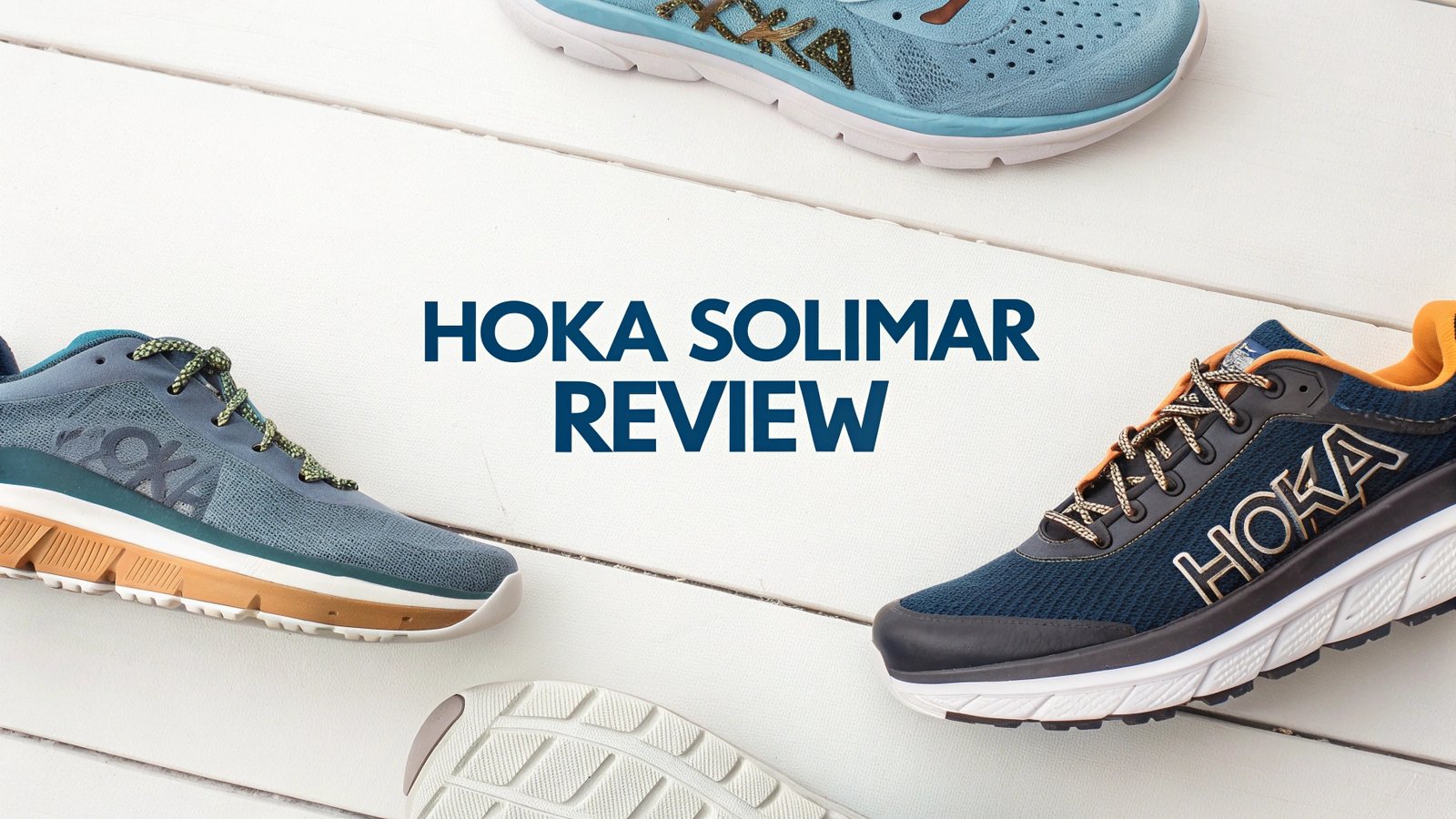
The Hoka Solimar stands out as a unique hybrid in the running shoe world. This everyday training shoe breaks away from Hoka’s traditional maximalist cushioning approach.
Instead, it offers a balanced blend of performance features that work equally well for gym sessions, casual runs, and daily wear.
Key Takeaways
- Lightweight Performance: At just 8.2 oz for men and 6.7 oz for women, the Solimar delivers exceptional lightness without sacrificing durability or comfort
- Versatile Design: This cross-training shoe excels in multiple activities including running, walking, gym workouts, and casual lifestyle wear
- Breathable Construction: Features excellent ventilation through its engineered knit upper, making it ideal for year-round training and hot weather conditions
- Balanced Cushioning: Offers moderate cushioning with 116 SA in the heel and 96 SA in the forefoot, providing adequate protection for daily training
- Durable Build Quality: Superior construction materials ensure long-lasting performance, outperforming many competitors in durability tests
- Affordable Price Point: Priced at $125, it offers excellent value compared to other Hoka models that typically range from $140-$200

What Makes the Hoka Solimar Special
The Hoka Solimar represents a departure from the brand’s signature maximal cushioning philosophy. This everyday training shoe targets runners and fitness enthusiasts who want versatility without compromise. The shoe features a 6mm heel-to-toe drop, which is higher than most Hoka models that typically use 4-5mm drops.
The design philosophy centers on creating a jack-of-all-trades shoe that performs well across different activities. Whether you’re hitting the gym for strength training, going for a casual 5K run, or wearing them for daily activities, the Solimar adapts to your needs. The shoe’s lightweight construction makes it feel responsive and nimble on your feet.
Construction and Materials Excellence
The upper construction showcases innovative engineering with its dual-density knit pattern. The microscopic analysis reveals alternating thick blue knit and thinner black knit arranged diagonally. This design creates exceptional breathability while maintaining structural integrity.
The recycled mesh upper demonstrates Hoka’s commitment to sustainability without compromising performance. The material feels soft and comfortable against the skin, with stretchy properties that accommodate different foot shapes. The gusseted tongue design helps keep debris out while providing a secure fit.
The heel construction features abundant padding that resembles a pillow, providing maximum comfort during extended wear. This generous padding is unusual for a lightweight shoe but contributes significantly to the overall comfort experience.
Weight and Performance Metrics
The Solimar’s lightweight profile stands as one of its most impressive features. At 8.2 oz (232g) for men’s size 9 and 6.7 oz (190g) for women’s size 7, it significantly undercuts the average running shoe weight. This represents a 23% weight reduction compared to its main competitor, the Hoka Kawana.
The weight distribution feels balanced and natural during movement. The shoe doesn’t feel front-heavy or back-heavy, contributing to a smooth heel-to-toe transition. This balanced weight distribution makes it excellent for lateral movements in gym settings and quick direction changes during training.
Cushioning Technology and Feel
The Solimar uses CMEVA midsole technology instead of Hoka’s premium ProFly+ foam found in higher-end models. This choice results in a firmer feel underfoot compared to typical Hoka shoes. The midsole measures 24.6 HA on the durometer scale, placing it in the moderate firmness range.
Shock absorption performance shows 116 SA in the heel and 96 SA in the forefoot. While these numbers fall below the average for running shoes, they provide adequate protection for shorter runs and training sessions. The energy return measures 53.6%, which is below average but sufficient for the shoe’s intended use.
The stack height measures 24.0mm in the heel and 18.0mm in the forefoot, creating the 6mm drop. This moderate stack height provides enough cushioning for impact protection while maintaining ground feel for gym activities.
Top 3 Alternatives for Hoka Solimar


Breathability and Comfort Features
The Solimar excels in temperature regulation through its advanced upper design. Laboratory testing reveals exceptional breathability levels that significantly outperform average running shoes. The engineered knit pattern allows efficient air flow while maintaining structural support.
The interior comfort features include a thick, padded tongue measuring 7.5mm – 29% thicker than average shoe tongues. This substantial padding enhances comfort and prevents pressure points during extended wear. The heel collar provides additional cushioning and support around the ankle area.
Moisture management works effectively through the breathable upper materials. Even during intense workouts or hot weather conditions, the shoe maintains comfortable internal conditions. This makes it particularly suitable for summer training and high-intensity activities.
Fit and Sizing Characteristics
The Solimar runs true to size according to extensive user feedback. However, the fit tends toward the narrow side, particularly in the toe box area. Measurements show the maximum width at 93.1mm and big toe area at 71.0mm, making it narrower than most competitors.
The toe box tapering measures 31%, which places it in the narrow category. Users with wider feet should consider sizing up or looking for the wide version when available. The stretchy upper materials provide some accommodation for different foot shapes.
Lockdown security performs well through the midfoot and heel regions despite the non-gusseted tongue design. The lacing system provides adequate adjustment range for most foot types. The heel cup offers secure fit without being overly restrictive.
Durability and Longevity
Outstanding durability emerges as one of the Solimar’s strongest attributes. Standardized testing using consistent abrasive force shows remarkable resistance to wear compared to other versatile training shoes. The upper materials demonstrate superior construction quality that withstands various workout demands.
The sole durability also impresses with robust materials that handle both road running and gym surfaces effectively. Users report extended lifespan even with regular multi-surface use. The reinforced high-wear areas show thoughtful design consideration for long-term performance.
Weather resistance performs adequately for normal conditions, though the shoe isn’t designed for extreme weather use. The color retention and material integrity maintain well over extended use periods.
Traction and Grip Performance
Wet surface traction registers 0.37 in laboratory testing, placing it in the average category for slip resistance. While not exceptional, this provides adequate safety for most daily running conditions. Dry surface performance shows noticeably improved grip and stability.
The outsole pattern delivers reliable traction on various surfaces including concrete, asphalt, and gym floors. The rubber compound balances durability with grip effectively. Multi-directional lugs provide stable footing during lateral movements and quick direction changes.
Indoor gym performance excels with appropriate grip for weightlifting, cardio equipment, and floor exercises. The sole design prevents slipping during lateral movements while allowing smooth transitions between exercises.
Flexibility and Movement
Forefoot flexibility measures impressively with below-average stiffness at 11.8N. This means the shoe requires less force to bend than typical running shoes, creating smooth heel-to-toe transitions during running and walking. The flexibility enhances performance during gym exercises like planks and lunges.
Natural foot movement feels unrestricted through the gait cycle. The balanced flexibility provides enough structure for stability while allowing natural foot function. This makes the shoe suitable for functional training and cross-training activities.
Break-in period requires minimal time due to the soft upper materials and appropriate flexibility levels. Most users report immediate comfort without the extended break-in period common with firmer shoes.
Performance in Different Activities
Running performance works best for distances up to 10K due to the moderate cushioning levels. The shoe provides adequate protection for daily training runs and tempo workouts. Longer distances may require more cushioned options for optimal comfort and protection.
Gym workout capability represents where the Solimar truly excels. The stable platform supports weightlifting activities while the flexibility accommodates functional movements. Lateral stability performs well for side-to-side movements and jumping exercises.
Walking and casual wear comfort remains excellent throughout extended periods. The lightweight construction reduces fatigue during long walking sessions. All-day comfort makes it suitable for lifestyle wear and travel.
Value Proposition and Pricing
At $125 retail price, the Solimar offers exceptional value within the Hoka lineup. This price point sits significantly below most Hoka models that typically range from $140-$200. The cost-per-performance ratio delivers strong value for users seeking versatility.
Competitive pricing compared to similar cross-training shoes from other brands makes it an attractive option. The durability factor enhances long-term value through extended usable life. Multi-activity capability eliminates the need for separate specialized shoes.
Sales and discounts often make the shoe available for under $100, creating even better value opportunities. The wide availability through various retailers provides shopping flexibility and price comparison options.
Temperature Performance and Seasonal Use
Cold weather limitations become apparent as the CMEVA foam becomes 75% stiffer and 41.5% firmer in freezing temperatures. This significant performance degradation makes the shoe less suitable for winter running in cold climates.
Warm weather performance excels due to the exceptional breathability and lightweight construction. Summer training becomes more comfortable with effective moisture management and temperature regulation. Hot climate suitability makes it ideal for year-round use in warmer regions.
Seasonal versatility works best in spring, summer, and fall conditions. Transition season use provides optimal performance during moderate temperature ranges. Users in consistently warm climates will find year-round utility.
Who Should Buy the Hoka Solimar
Ideal candidates include gym-goers who run occasionally, casual runners seeking versatility, and lifestyle users who want athletic shoe performance. The shoe works perfectly for people who want one shoe for multiple activities rather than specialized footwear for each activity.
Fitness enthusiasts who engage in varied workout routines will appreciate the adaptability. Budget-conscious buyers seeking Hoka quality at a lower price point find excellent value. Lightweight shoe preferences align well with the Solimar’s construction.
Travel-friendly users benefit from the versatility and packability of having one shoe that handles multiple activities. Urban dwellers who walk extensively while maintaining active lifestyles find ideal functionality.
Who Should Consider Alternatives
Long-distance runners should look toward more cushioned options like the Hoka Clifton 9 or Rincon 3 for better protection and comfort over extended distances. Maximum cushioning preferences won’t find satisfaction in the Solimar’s moderate cushioning approach.
Cold climate runners need weather-appropriate options that maintain performance in low temperatures. Wide-foot users should consider the wide version or explore other brands with more generous toe box dimensions.
Serious competitive runners may want more specialized running-specific features found in dedicated racing or training shoes. Heavy-duty trail running requires more aggressive traction and protection than the Solimar provides.
Frequently Asked Questions
Is the Hoka Solimar good for long distance running?
The Solimar works best for runs up to 10K due to its moderate cushioning levels. For longer distances, consider the Hoka Clifton 9 or Rincon 3, which offer more substantial cushioning and protection for extended running sessions.
How does the Solimar fit compared to other Hoka shoes?
The Solimar runs true to size but fits narrower than most Hoka models. The toe box measures 31% narrower than average, so users with wider feet should consider sizing up or looking for the wide version when available.
Can you use the Hoka Solimar for gym workouts?
Yes, the Solimar excels in gym environments. Its stable platform supports weightlifting, while the flexibility accommodates functional movements. The lightweight design and lateral stability make it excellent for cross-training activities.
What is the main difference between Solimar and other Hoka shoes?
The Solimar uses firmer CMEVA midsole technology instead of Hoka’s premium ProFly+ foam, resulting in a less cushioned but more versatile shoe. It also features a higher 6mm drop compared to the typical 4-5mm found in other Hoka models.
How long do Hoka Solimar shoes typically last?
The Solimar demonstrates exceptional durability in testing, often outlasting competitors in the versatile training category. With regular use across multiple activities, users typically report 400-600 miles of effective life, depending on usage patterns and running surfaces.
Is the Hoka Solimar worth the price?
At $125, the Solimar offers excellent value within the Hoka lineup and compared to similar cross-training shoes. The versatility, durability, and multi-activity capability provide strong cost-per-performance value, especially when found on sale.